Author: admin

  • Landing Page

    Landing Page

    [et_pb_section][et_pb_row][et_pb_column type=”4_4″][et_pb_text]

    Landing pages are an essential element of any online marketing campaign. They are standalone web pages that are specifically designed to convert visitors into leads or customers, and they play a crucial role in the success of any business’s online marketing efforts.

    One of the main benefits of landing pages is that they are focused on a single goal. Unlike a homepage or blog post, which may contain multiple calls-to-action and links to other pages, a landing page is designed to guide visitors towards a specific action. This can be filling out a form to request more information, signing up for a newsletter, or making a purchase.

    The design and content of a landing page should be tailored to the specific audience and campaign, and there are several key elements that all landing pages should include (they may vary from the image but it is recommended to use at least the the elements in the list below):

    1. A clear and compelling headline: The headline should clearly communicate the value proposition of the product or service, and it should be attention-grabbing enough to make visitors want to learn more.
    2. A strong call-to-action (CTA): The CTA should be prominently displayed on the page and should clearly tell visitors what action they should take. It should be specific and actionable, such as “Sign up now” or “Get your free trial.”
    3. Supporting images or videos: Visual elements can help to reinforce the message of the landing page and make it more engaging for visitors. They should be relevant and high-quality, and they should support the overall message of the page.
    4. Social proof: Including testimonials, ratings, and reviews from other customers can help to build trust and credibility with visitors. These elements can also help to persuade visitors to take the desired action.
    5. A form: A form is an essential element of most landing pages, as it allows visitors to provide their contact information or make a purchase. The form should be easy to use and should only ask for the necessary information.
    6. Trust indicators: Including elements like a privacy policy, secure payment badges, and money-back guarantees can help to build trust with visitors and increase the likelihood that they will take the desired action.
    7. Mobile optimization: With the increasing number of users accessing the web on their smartphones, it is essential that landing pages are optimized for mobile devices. This includes ensuring that the page loads quickly and that the layout and design are mobile-friendly.

    The full image:

    Landing Page Elements

    In addition to these elements, it is important that landing pages are designed and written in a way that is consistent with the overall branding and messaging of the business. This can help to create a cohesive and professional image, and it can increase the credibility of the business in the eyes of visitors.

    To sum up, landing pages are a critical component of any online marketing campaign, and they should be designed with a specific goal in mind and tailored to the target audience. By including the key elements outlined above, businesses can increase the chances of converting visitors into leads or customers.

    [/et_pb_text][/et_pb_column][/et_pb_row][/et_pb_section]

  • Clickfunnels – How to access the version one editor?

    Clickfunnels – How to access the version one editor?

    You can access the V1 editor by following these instructions:

    1. Go into your funnel page editor.
    2. Once there, take a look at the URL at the top of the window. Find the part with a “_v2” (no quotes) and remove it.
    3. Hit ENTER.
    4. You’ll be sent to Editor V1.

    Example:

    Change URL:

    https://user-app.clickfunnels.com/pages/50967555/editor_v2?optin=true&sales=true

    To:

    https://user-app.clickfunnels.com/pages/50967555/editor?optin=true&sales=true

    When needed you can switch back to v2 editor by adding back the “_v2” to the URL.

    Why would you need editor v1?

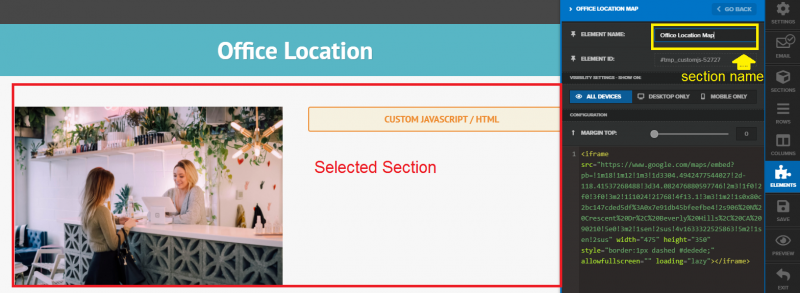
    If you creating a template which page parts you want to reuse (save different sections of it) it is useful to rename those sections (in version 1) to meaningful names so when you save them (in version 2) they will automatically have those assigned names.

    Example:

  • How We Built a Facebook Inspector

    The Citizen Browser project seeks to illuminate the content Facebook elevates in its users’ feeds

    By: Surya Mattu, Leon Yin, Angie Waller, and Jon Keegan

    Originally published on themarkup.org

    Social media platforms are the broadcasters of the 21st century.

    Like traditional broadcasters, social media platforms choose—through their algorithms—which  stories to amplify and which to suppress. But unlike traditional broadcasters, the social media companies are not held accountable by any standards other than their own ever-changing decisions on the types of speech they will allow on their platforms.

    And their algorithms are not transparent. Unlike on the evening news broadcast, no one can see what they have decided will be the top story of the day. No two people see exactly the same content in their personalized feeds. As a result, it is difficult for independent groups to track the spread of misinformation like the “Plandemic” video, which garnered millions of views on both Facebook and YouTube before being removed.

    So we decided to try to monitor what is being algorithmically broadcast to social media users by bringing together a first-of-its-kind national panel of users who are paid to share their data to us. We started with Facebook, which has more than 2.7 billion monthly active users.

    We built a custom standalone desktop application that was distributed to a panel of more than 1,000 paid participants. These panelists provided us with demographic information about themselves—gender, race, location, age, political leanings, and education level—and connected the Citizen Browser application to their personal Facebook accounts. The application periodically captures data from the panelists’ Facebook feeds.

    To protect the privacy of panelists, we automatically strip potential identifiers from their captured Facebook data. The raw data we collect from them is never seen by a person and is automatically deleted after one month.

    After the redaction process, we store links, news articles, and promoted groups and pages in a database for analysis. The data we collect through the app is used, in combination with demographic and political data provided by the panelists, to determine what information Facebook serves to different people, what news and narratives are amplified, and which online communities people are encouraged to join. The application, data-processing pipeline, and underlying cloud infrastructure were audited by a third-party security research firm, Trail of Bits. It carried out a security assessment and reviewed our code for best practices in securely processing panelists data. We took additional steps to protect user data based on the security firm’s recommendations. We describe these privacy-preserving steps in more detail in the Redactors section and Appendix 2.

    Background

    According to a recent study by Pew Research, about one in five Americans say they get their political news primarily through social media. But very little is known about the workings of the algorithms that decide which content to recommend to which people.

    Facebook discloses some general principles about how its algorithm works: It says it prioritizes content based on who posted it, what type of content it is, and whether the post has attracted a lot of shares and reactions. But it has not allowed much independent research to be conducted on its platform.

    In the wake of Cambridge Analytica, Facebook added sweeping restrictions on the use of its core Facebook Open Graph developer API and has increased the use of human reviews to approve developer apps. For example, just a few years ago it was very easy to collect the public posts for any page on Facebook (which was an important way to track news sources on the platform), but that availability has since been restricted to top-level metadata about public pages.

    In 2018, Facebook announced a collaboration with the independent academic researchers at Harvard University’s Social Science One. Facebook committed to sharing more than a petabyte of data with researchers whose proposals were accepted by an independent committee. But after more than 18 months of delay, Facebook did not live up to its promises. Instead, researchers were given access to an extremely limited dataset and CrowdTangle, a social analytics firm owned by Facebook. In response to these shortcomings, the project co-chairs wrote that the “current situation is untenable,” and philanthropic partners began to leave the project.

    In 2020, Facebook announced a new research partnership to better understand the impact of Facebook and Instagram on key political attitudes and behaviors during the U.S. 2020 elections, Social Science One facilitated the start of the project. Facebook said it does not expect the study to result in published findings till mid-2021 at the earliest.

    The main source Facebook makes available for journalists and researchers to understand the patterns on its platform is CrowdTangle, which it bought in 2016. CrowdTangle offers a robust view of Facebook and Instagram engagement for posts, links, videos from public pages, groups, and verified users. Importantly, it does not provide data about the number of times content is shown to users.

    Facebook has publicly criticized journalists who use CrowdTangle to understand what is being amplified on Facebook. In order to measure popularity, Facebook says, you would need to measure the number of people who see the post. However, at the moment Facebook does not make impression data available publicly.

    Citizen Browser is an attempt to examine those algorithms by assembling a demographically diverse panel of Facebook users and monitoring what content is recommended to them.

    Prior Work

    Citizen Browser builds upon other work that attempts to understand the Facebook ecosystem.

    Blue Feed, Red Feed was a 2016 project from Wall Street Journal reporter Jon Keegan (who is now at The Markup and a contributor to this methodology) that used Facebook’s own data to examine the sharing habits of 10 million U.S. users over the course of six months. Based on self-described political beliefs and the users’ sharing habits, the Journal used the news sources most strongly aligned with its most partisan users to display side by side a simulated view of what a liberal and conservative news feed might look like.

    NYU Ad Observatory is a browser-extension-enabled project that archives and shares ads and  metadata from Facebook and Google’s political ad libraries as well as targeted ads served to volunteers who’ve downloaded the extension and signed into Facebook on their desktops. In an attempt to squelch third-party data collection, Facebook sent a letter to NYU in the run-up to the U.S. 2020 presidential election demanding an end to the project.

    Nieman Lab used Amazon’s Mechanical Turk platform to survey 173 people about the news sources they saw in their news feed. Surprisingly, for the incredibly busy news cycles of October 2020, it found that a majority of the sampled users saw no news at all (in the first 10 posts of their feeds).

    For an opinion piece discussing Baby Boomers’ exposure to conspiracy theories and misinformation on Facebook, The New York Times’s Charlie Warzel did a similar experiment, observing the Facebook feeds of two strangers who agreed to share their credentials.

    The Citizen Browser Panel

    Description

    Citizen Browser monitors the content Facebook presents to its users in their news feed along with what groups and pages are suggested to them.

    The panel is currently composed of participants from 48 U.S. states. We used a survey research provider to invite a nationally representative sample of U.S. adults to join the project as paid participants. Because we could only accept participants who used a desktop or laptop, had installed the Chrome web browser, and were active users of Facebook, it was difficult to get participants. About 95 percent of the participants we approached failed to complete the registration requirements. The panel size also fluctuated: As panelists dropped out for various reasons, we recruited fresh participants.

    To most accurately describe the demographic makeup of this dynamic panel as of the time of publication, we tabulated the demographic composition of our panel group based on panelists who kept the application connected between Nov. 30 and Dec. 30, 2020, and had at least 20 data captures within that period.

    The tables below describe the demographics of our panel during that December time frame, alongside our target demographics based on national averages from the 2016 American Community Survey from the U.S. Census Bureau.

    Despite our best efforts, we failed to reach our targets for Hispanic and Latino panelists, a challenge that other pollsters have faced as well. We also failed to reach our targets for Trump voters, a phenomenon that pollsters similarly faced in the runup to the presidential election. Our panel is also older and more educated than the U.S. population, which reflects desktop computer usage.

    We describe the challenges we had reaching these target demographics in the Limitations section.

    Panel Makeup

    Citizen Browser Data Collection

    The Application

    The Citizen Browser app is a standalone desktop application based on the open source Electron JavaScript framework. The app is compatible with Windows and macOS operating systems. Panelists download the application through the panel management portal after taking a short demographic survey. When they download the app, the panelists are asked to sign in to Facebook in a browser that is controlled by the application. Once they have successfully signed in, panelists are no longer required to interact with the application.

    The app is designed to run 24/7 and remains open in the background of the user’s computer, minimized in the Start Bar or Finder toolbar. The app performs Facebook captures between one and three times a day using NGFetch, a proprietary browser automation tool developed by Netograph. NGFetch uses a combination of the Chrome Devtools Protocol and JavaScript to load and interact with webpages. NGFetch captures data from the browser including HTML, a screenshot of the page, and all metadata other than large response bodies (HTML/images/CSS), as described here by Netograph.

    To capture data, the application visits the following Facebook urls with a signed-in browser profile:

    1. https://facebook.com
    2. https://facebook.com/groups
    3. https://facebook.com/pages/?category=top
    4. https://www.facebook.com/groups/discover

    The app collects html source code and screenshots from Facebook. This includes the Facebook homepage, suggested groups, and recommended pages. We focus only on items promoted through shared links on these pages. This includes advertisements, public posts, publicly shared video links (not the videos themselves), shared links and reaction counts (no text or usernames are captured), suggested groups, and suggested pages. For a detailed description of what data we collect, see Appendix 3.

    The app does not collect contents or photos from personal, direct messages. It does collect photos that are shared on users’ homepages, but we use a computer program to identify and discard them without human intervention. We redact and discard photos, comments, and identifiers such as users’ names and friends’ names.

    The app does not track user behavior on Facebook, and it does not collect any user browsing information—even if the user is on Facebook when the app is running.

    Once the capture routine is complete, the collected files are compressed in a zip archive and uploaded to our cloud infrastructure. That data is immediately processed to remove information that could identify panelists and their friends, including account names, usernames, the names of social media connections and contacts, profile pictures, and friend requests. (See The Redactors, below.)

    The Redactors

    To ensure that we protect user privacy, we built redactors that strip potentially identifying information from data collected from panelists. The raw data we collect from panelists is never seen by a person and is automatically deleted after one month. The only data that is ever analyzed is the post-redacted data.

    The automatic redactors operate by finding the xpaths of elements based on accessibility features (ARIA), data attributes, and the content of href links. To account for multiple interface designs available on Facebook, we wrote redactors and parsers customized for each version.

    The redactors block out sections of screenshots and scrub the saved source code of identifiers. We consider the following page elements to be identifiers: Facebook video stories, video chat rooms, comments and replies on posts, friend requests, birthdays, contacts, messenger conversations, notifications, pages or groups that a panelist might manage, private usernames and avatars, posts that contain memories, profile picture updates, “People you may know,” or crisis responses.

    We use the resulting xpaths to identify rectangles to redact in the screenshots and elements to scrub in the source code. We also parse embedded javascript found in the head elements of source code to identify and remove all instances of the Facebook ID and the first and last name of each panelist.

    The original capture is hosted on a cloud storage service with a strict no-access policy. This data can only be accessed by the automated redactors and is deleted after one month. The redacted copy of the file is then processed. There is more information about how we secure user data in Appendix 1. The full list of what we store after redaction is in Appendix 3.

    Limitations

    Citizen Browser’s analysis is limited by the following factors:

    1. Demographic balance
      1. a) System compatibility and smartphone dependency
        The Citizen Browser application’s system requires Mac or Windows computers for security and could not be used by people who access the internet only through mobile devices. In its Internet/Broadband Fact Sheet, Pew Research reports that in 2019, 23 percent of Black and 25 percent of Hispanic households rely on smartphones for internet access compared with 12 percent of White households. For adults with less than a high school education, 32 percent rely on smartphone devices.
      2. b) Trust in surveys and political leanings
        About 95 percent of people contacted for the panel chose not to participate because of lack of trust in having a third-party application installed on their computer or other concerns for privacy. Additionally, we faced a challenge in getting a balanced sample of political leanings that is similar to the challenges found in presidential polling research, which has suggested distrust in polling is correlated with conservative leanings.
    2. Data capture
      1. We try to ensure that our parsers are up to date, but it’s possible that some data is being lost as Facebook is constantly updating its user interface and running A/B tests on its users; our parsers might not work equally well on the different versions. In addition, NGFetch relies on the Chrome Web Browser. It’s possible that there are differences in Facebook’s targeting or behavior for users of non-Chrome browsers.
    3. Obscure algorithms
      1. Due to the variety of signals that go into the content Facebook shows to its users, we cannot determine why any particular piece of content is shown. The only exception to this is when that information is specifically made available by Facebook, as it does with the “Why am I seeing this ad?” feature.

    Appendices

    Appendix 1: Security Features

    The app incorporates code signing, a security technology that adds a unique signature to the app. This allows the end user’s system to know the code was authored by The Markup and detect if the app was compromised during an update. To fulfill the requirements on macOS, the app was registered in the Apple Developer Program. On Windows, the app is signed with a Windows Authenticode certificate.

    The application has highly restricted access to the cloud server. It uses a one-time presigned url to upload the files to Amazon’s S3 service. This presigned url forces the uploaded file to conform to its assigned file size and timestamp, preventing unexpected files from being uploaded. Once this zip file of the capture is uploaded, it is deleted from the user’s computer.

    The Citizen Browser application never sees the panelist’s login information. The application is bundled with a custom capture tool that communicates with a Chrome browser using the Chrome Developer Tools Protocol and JavaScript. This tool acts as a firewall built into the app and prevents it from having any access to the user’s login details entered in the Chrome browser.

    A new browser profile for the Chrome browser is generated during the onboarding process and then used for captures. This browser profile is completely isolated from the application and never leaves the panelist’s computer. When the panelist uninstalls the application, this profile is deleted from the computer.

    The raw data collected from users is automatically deleted after a month. The S3 bucket with the uploaded zip has an access policy allowing only the cloud computer (AWS lambda) running the redactors to view the data. Only a few employees of The Markup have permissions allowing them to modify this policy, and such changes are logged.

    Development and testing of the application and redactors is done on data from an internal group of testers. The screenshots we collect are used only for testing and development purposes from this group. Screenshots collected from panelists are never used in analysis; only the redacted html is used from panelists. All testing is done using a copy of the infrastructure in a separate AWS account.

    Appendix 2: Security Audit 

    Trail of Bits, a security research firm, audited the desktop application and cloud infrastructure from Dec. 8 to Dec. 11, 2020. The firm reviewed the source code through a combination of automated and manual techniques. In addition to a security assessment, it also reviewed the code for best practices in securely processing panelists’ data.

    Citizen Browser’s desktop applications code was analyzed using Electronegativity, a tool that identifies security weaknesses in Electron-based applications. With its JavaScript codebase, the Electron framework operates in a manner similar to a website on the user’s machine and shares similar vulnerabilities to web-based applications. This analysis helped us identify ways in which to configure the application to protect it from being hijacked by malware or other malicious actors.

    A static analysis of the backend code base was done using a combination of manual review and Semgrep; the relevant recommendations were implemented.

    The cloud infrastructure powering the project was also audited by Trail of Bits. Using manual review, ScoutSuite, and cloudsplaining, they identified ways in which we could further limit  permissions to resources such as storage, serverless computation, and API gateways to strengthen our security posture.

    Appendix 3: Data We Collect and Store 

    This appendix describes the tables and columns of the database that are stored after redacting and processing the data

    Appendix 4: How We Categorize Facebook Posts

    Because Facebook pages contain many types of content—for example, the Facebook news feed has several types of posts, including advertisements, group posts, and private posts—we created different categories for our analysis based on the distinguishing features we found in the data. These are listed below:

    Public and private posts (is_public)

    We looked for differences among audience icons and their accessibility tags (“Shared with Public”) to identify whether a post is public or shared privately.

    Shared by Facebook (is_facebook)

    We identified posts that were from Facebook—like election information, “People you may know” modules, and unpaid promotions for Facebook features and products by noticing that none of them include audience icons. In addition, we found Facebook promotional information in the head element of the source code.

    Sponsored posts (is_sponsored)

    Sponsored posts usually had either text or accessibility features that identified the post as an advertisement. However, that was not always the case. Sometimes Facebook obfuscated these signals with random noise in the form of invisible characters that polluted the “Sponsored” text or invisible elements with accessibility tags that mislabeled user posts as advertisements. We correct for these mistakes when we categorize posts.

    Political advertisements provide attribution to the political group or PAC that paid for the posting. We collected this information, whenever possible.

    Recommended posts (is_suggested)

    Facebook showed posts from pages and groups that our panelists did not “like.” We identified these posts using div elements with the text “Suggested for you.”

    This article was originally published on The Markup and was republished under the Creative Commons Attribution-NonCommercial-NoDerivatives license.

  • How We Investigated Banned Items on Amazon.com

    How We Investigated Banned Items on Amazon.com

    It wasn’t that hard; Amazon’s own search and recommendation tools led the way

    By: Jon Keegan and Annie Gilbertson

    Originally published on themarkup.org

    Amazon has reaped billions of dollars through the expansion of third-party sales in the past several years, boasting about it in a recent letter to shareholders. But at the same time that it has dominated e-commerce, media reports have highlighted Amazon’s struggles to suss out bad sellers, pointing out its failures to catch counterfeit or dangerous products on the platform.

    The company bans nearly 2,000 items for sale in the United States, an ever-expanding list of restrictions organized into 38 categories of rules that cover products from skincare and supplements to assault weapons and human organs.

    For this investigation, we sought to answer two key questions: How well is Amazon policing banned products in its U.S. marketplace—and could we find any for sale? We focused on five categories of Amazon’s prohibitions related to weapons, criminal activity, and spying, and crafted a list of 279 prohibited items that were searchable. Many of these items appear to be legal to sell but are barred by Amazon’s rules.

    We found nearly 100 listings of banned items for sale, including some multiples from different sellers for the same type of product. (When there were many listings of one type of product, we did not document every last one, but rather chose a few.)

    Five of the banned products were sold by Amazon itself, not a third-party.

    Among the prohibited items we found: AR-15 parts, compounds that reviews showed were used as injectable drugs, and equipment used to make potentially deadly counterfeit pills and for the dangerous process of butane hash oil extraction.

    After we contacted Amazon, all but 16 of the banned listings were removed. Company officials declined to comment on how the banned items evaded detection or to provide information on how many had sold before the listings were deactivated. They did not provide any comments on the banned products we found that they sold directly to consumers.

    And they declined to explain why the company chose to leave up some items: products named in their prohibitions, products primarily used for ingesting drugs, which meet the definition under federal law for drug paraphernalia, and gun parts and gunsmithing tools that we confirmed with a weapons expert.

    Amazon spokesperson Patrick Graham said in a written statement that sellers are responsible for following laws and Amazon policy, and that the company has “proactive measures in place to prevent suspicious or prohibited products from being listed and we continuously monitor the products sold in our stores.” (Read more in the Amazon’s Response section.)

    Some third-party sellers of banned goods avoided certain words and misclassified items, presumably to skirt enforcement. In some cases, we typed the exact language of Amazon’s restriction into its search engine and found prohibited items, suggesting some of its automated tools are not working in concert with its prohibited items enforcement.

    As a test of Amazon’s safeguards, The Markup attempted to list banned items for sale from a personal Amazon.com account in New York. We successfully listed two items that were prohibited on Amazon.com yet legal to sell under New York State and federal law: an armorer’s wrench for use on an AR-15 and a 10-round AR-15 magazine. We used the manufacturers’ photos, and bypassed filters by using a universal product code (UPC) that we bought online for one item and by avoiding certain keywords for both.

    Background

    Amazon’s shortcomings in policing its marketplace have been documented by numerous media exposés.

    A Wall Street Journal investigation last year found more than 4,000 problematic items for sale on Amazon.com, including products that were “declared unsafe by federal agencies, are deceptively labeled or are banned by federal regulators.” The newspaper compared Amazon to a flea market: “It exercises limited oversight over items listed by millions of third-party sellers, many of them anonymous, many in China, some offering scant information.”

    Additionally, The Wall Street Journal has detailed what happens when customers get hurt by products they bought through Amazon, finding the company dodges responsibility by arguing in court that it’s not responsible for what people say on their site under the 1996 Communications Decency Act.

    Also last year, CNBC found expired food and baby formula on the site, and The Washington Post discovered forbidden CBD products. In 2014, The Atlantic reported that when customers searched for digital scales, Amazon.com’s purchase recommendations offered them baggies, rolling papers, and grinders—“a field-tested kit for starting an illicit business.”

    The Markup sought to advance the coverage by looking specifically at products tied to potentially illicit or criminal behavior and weapons, seeking to understand more about how well Amazon polices its own restrictions—and protects the public.

    Product Categories

    We focused on five of Amazon.com’s restricted product categories related to weapons, criminal activity, and spying, as they appeared on Jan. 16, 2020. Some of these pages have since been updated:

    Some of Amazon’s restrictions are very specific, but others are vague, making them more difficult to detect with certainty. To avoid ambiguity, we focused our search on items that met the following criteria:

    Clear restriction
    The restriction was clearly defined and without vague caveats (e.g., we did not look for items where some were allowed but rather for those where all were “prohibited”).

    Specific item
    The product was identifiable and not overly broad (e.g., we looked for Kung Fu stars but not “other dangerous weapons”).

    Distinguishable
    The banned item can clearly be distinguished from permitted listings (e.g., prohibited bolt pins for guns were too similar to other pins, so we excluded them).

    Amazon’s restrictions around drug paraphernalia mandate that items cannot be “primarily intended or designed for use in: manufacturing, compounding, converting, concealing, producing, processing, preparing, injecting, ingesting, inhaling, or otherwise introducing into the human body a controlled substance,” which we took to include marijuana, given federal law and that the company specifies some marijuana paraphernalia among its prohibitions. Along with the specific items named by Amazon, The Markup also included other common drug paraphernalia as defined in federal drug paraphernalia law, including crack pipes and straws marketed for use to inhale substances and sniffing spoons, both of which can be used to ingest cocaine.

    Pipes were tricky because the company allows pipes for tobacco use. It’s impossible to prove that the pipes for sale on Amazon.com at any given time are for marijuana use, so we eliminated marijuana pipes from our test. Crack pipes, which are distinguished by the Drug Enforcement Agency as those with a synthetic rose in the cylinder, were clear enough to include.

    In regard to pill presses, Amazon expressly prohibits those used to “imprint a pharmaceutical drug name or identification number onto a tablet or pill.” We considered all pill presses and molds that can take a pharmaceutical imprint die to be in violation.

    We also grouped synonyms and redundant items on the restricted products list as a single item.

    We did not check for prohibited items that would require outside information from government agencies, laboratory testing, or detailed inspection to determine if the listing violated Amazon’s rules.

    Our final list contained 279 banned items to search.

    The Search

    We searched for these products primarily during two sessions: one week in February 2020 and two weeks in April 2020.

    We conducted our searches using both Amazon.com’s search engine and Google’s search engine (specifying that results must appear on Amazon.com). We searched for each banned item multiple times, using slang, synonyms, brand names, and other search terms. Often, Amazon.com’s search engine returned results using the exact wording from its restrictions.

    Since many sellers sought to disguise the items, we confirmed how the items are typically used by reviewing customer feedback, photos, and outside sources, such as YouTube videos of hash oil extraction and gun assembly. We frequently visited outside websites that sold gun parts to compare what we were seeing on Amazon.com to what we knew was the real thing.

    We also sought outside confirmation on the two compounds we found that reviewers said they had injected. The World Anti-Doping Agency designates one (TB-500) as a “prohibited substance,” and the U.S. Anti-Doping Agency warned athletes that the second one (BPC-157) is not approved for human use.

    In some cases, we noticed several different listings for a single type of item. Rather than include each one, we selected a small sample from the top search results to include in our findings.

    Listings Found

    Each suspected prohibited listing was independently verified by both journalists working on the story. And, in the case of gun parts, we confirmed that each of the items were not expressly permitted for sale on Amazon (many are explicitly allowed on Amazon’s restricted products list), and the final list of items we found was double-checked by two weapons experts. All told, we documented 97 listings for products on Amazon.com that we determined meet the criteria of the company’s prohibitions. In some cases, we documented multiple listings for the same type of item and counted each of those individually.

    The found products, listed under the company’s categories, are:

    Hazardous and Dangerous Materials

    • Caps for toy guns
    • Projectile flares
    • Military-style gas masks
    • Nitric acid
    • Liquid mercury
    • Mercury switches
    • Toy crossbows

    Drug and Drug Paraphernalia

    • “Legal steroids”
    • Homeopathic teething products
    • Compounds reviewers were using as injectable drugs
    • Butane hash oil extractors
    • Crack pipes
    • Bongs
    • Dab kits
    • Wired cigarette papers
    • Nitrous oxide crackers
    • Bullets with attached mini spoons to ingest substances, which can include cocaine
    • Straws to ingest substances, which can be used for cocaine
    • Smell-proof dime bag
    • Products to defeat drug tests
    • Pill presses and molds
    • Iodine (more than 2.2%)
    • Coca Leaves
    • Damiana
    • Kanna
    • Marshmallow leaf

    Explosives, Weapons, and Related Items

    • AR-15 vise blocks
    • AR-15 armorer’s wrenches
    • Heat shields and handguards
    • Charging handles
    • AR-15 grips
    • Door breachers
    • Magazine extensions
    • Magazine couplers
    • Muzzle brakes
    • Pistol stabilizing braces
    • Receiver wedges or buffers
    • Sling plates
    • Collapsible stock
    • Firing springs
    • Shobi-zue
    • Knives disguised to look like harmless items
    • Caltrops
    • Saps
    • Sap hats
    • Clubs
    • Billy clubs

    Lock Picking and Theft Devices

    • Jigglers
    • Concealed handcuff keys
    • Lock picking guns
    • Lock picking sets
    • Slim-jims
    • Training locks
    • Tubular lock picks
    • Master keys
    • Sensormatic detachers

    Surveillance Equipment

    • Bugging devices
    • Hidden AV cameras
    • Hidden audio recorders

    *Includes multiple listings of same type of item


    After conducting hundreds of searches, we had a better understanding of how sellers of banned items avoid detection. Most simply left out certain words or intentionally misspelled or misclassified items. For example, we found a pill press labeled as a candy maker and bongs sold as vases.

    Even when mislabeling a listing, many sellers used accurate photos of the banned product.

    Several products had been for sale for months—even years. At least eight were designated “Amazon’s Choice,” and at least 39 were shipped from Amazon’s own warehouses. Five of the items were marked “ships from and sold by Amazon.com.”

    Offensive and Other Controversial Materials

    Early on in the reporting, we examined Amazon.com’s restrictions around offensive and controversial materials, which prohibit the sale of products that glorify violence or child abuse or are associated with hate groups. We were easily able to find items that broke Amazon’s rules: a child’s bed set with the alt-right meme Pepe the Frog with a swastika on its stomach and swag tied to the white supremacist groups Volksfront and Identity Evropa. It wasn’t clear if any of these products actually sold. The listings were live for months until we provided Amazon with links, and they were removed.

    We ultimately decided not to include those items in our data findings, in part because they do not fit our criteria for specific products, and because they presented a different kind of harm.

    Guardrails

    To find out what safeguards Amazon has in place to stop prohibited items from posting in the first place, we explored the seller portal.

    We registered as a seller, choosing the $39.99 per month “professional” account. This was a new account that had no history of selling on the site.

    When we started creating a product listing for a bong, Amazon.com’s interface suggested categorizing it with vases in home decor, where other third-party sellers had listed bongs. Not only was Amazon failing to catch these listings, but it was also recommending miscategorizations in violation of its own rules. We did not complete the process of publishing the bong listing.

    We later created listings for two prohibited items: an AR-15 armorer’s wrench and a 10-round AR-15 magazine. Both items are legal to sell in the U.S. and New York State but explicitly prohibited on Amazon.com.

    Amazon requires universal product codes, UPCs, or other global identifiers when uploading items for sale. When we used the correct product names and correct codes from the manufacturer’s website, Amazon’s guardrails correctly identified the product as banned and blocked the listing from going live.

    Next, we changed the title and description of both items to omit the keyword “AR-15” and miscategorized them so they would appear in an unrelated part of the product catalog. We continued to use the real manufacturer names, product photos, and description. The wrench was approved by Amazon’s system and published; the magazine was not approved.

    We then purchased a new UPC code for the magazine, and when we used it, Amazon allowed us to list the magazine for sale. We were able to place both items in a different, personal shopping cart. We then took down the listings before anyone could make a purchase.

    It’s important to note that Amazon knew little about us as sellers other than our failed attempts to list banned items, yet still allowed us to list the items with these workarounds.

    Amazon’s Response

    The company declined to comment on most of the items we found, nor would it provide information on how many of the banned items were sold. Dozens of the prohibited listings were taken down in a matter of days after we contacted the company. Some of those we later removed from our final numbers because, upon review, they didn’t strictly adhere to our methodology.

    “If products that are against our policies are found on our site, we immediately remove the listing, take action on the bad actor, and further improve our systems,” Graham, the Amazon spokesperson said.

    He said that the company was taking “appropriate action on the bad actors that evasively listed them.”

    However, after Amazon provided this statement, The Markup found many of the sellers that were in violation continued to sell banned products, including Lead and Steel, which sold banned gun accessories, and and another company that sold compounds that reviewers were injecting. When we asked Amazon about this in follow-up questions, those storefronts disappeared from Amazon.com.

    The dataset sent to Amazon included 16 listings that the company never removed. Of those, we decided to remove 10 from our final dataset: two weed grinders, a silicone pipe and a weed grinder set, a “same day detox” product, nitrous oxide canisters, and gun parts and tools that are potentially permissible under Amazon’s rules.

    The company declined to comment on why some prohibited products were being shipped from Amazon’s warehouses, nor would it speak to how banned items became listed as “Amazon’s Choice.”

    Graham denied that injectable drugs were for sale and said the listings we found were for “chemicals that were clearly marketed as being for research use only and not for human consumption.” He added that the company would nevertheless be “restricting them going forward.”  Amazon removed the specific listings we sent the company, but at the time of publication, other listings for these compounds could still be found on Amazon.com.

    Graham declined to comment on why the company’s search engine returned results when we entered the exact wording of the prohibition, nor would he comment on why the sellers’ tool suggested erroneous categories. He said it’s the responsibility of sellers to correctly list their products and follow the rules.

    Earlier this year, a company executive told Congress that the company is shoring up the slippage of of “counterfeits, unsafe products, and other types of abuse” by requiring sellers of certain items to be preapproved, partnering with brands to pull counterfeits, and performing “proactive scans to identify safety risks.”

    “As a result of our proactive efforts, in 2019, we blocked over 2.5 million suspected bad actor accounts from entering our store and more than 6 billion suspected bad listings from being published in our stores,” Graham told The Markup in an emailed statement that had previously been given to Congress.

    Conclusion

    Amazon is failing to stop banned items from being sold by third parties on its site—and even selling some banned items itself direct to U.S. customers..

    We documented nearly 100 instances of Amazon’s failure to detect problematic listings before they post, allowing a back alley to its marketplace where items related to criminal activities, weapons, and drug use are openly sold.

    We found sellers can easily shroud listings enough to evade automated detection by Amazon’s filters while still making the banned items findable for customers—often through Amazon’s own product search engine. We were able to list two banned items ourselves using this method. In some cases, Amazon’s sellers’ tools suggest miscategorizations.

    In five cases, the listing was marked as “ships from and sold by Amazon.com.” Some banned items from third parties shipped from Amazon’s own warehouses, and the company promoted a handful of the banned items we found as “Amazon’s Choice.”

    This article was originally published on The Markup and was republished under the Creative Commons Attribution-NonCommercial-NoDerivatives license.

  • Endless loading/spinner on the checkout page

    Endless loading/spinner on the checkout page

    After fiddling for quite some time, disabled and enabled plugins, looked at browser console for clues, I found the solution to be this CSS code:

    /* Fix issues with jquery overlay blocking checkout button */
    .woocommerce .blockUI.blockOverlay {
    position: relative!important;
    display: none!important;
    }

    Source page: https://wordpress.org/support/topic/checkout-page-hangs/

  • The DNS server 8.8.8.8 is not a valid IP address error

    The DNS server 8.8.8.8 is not a valid IP address error

    If you see this error:

    The DNS server 8.8.8.8 is not a valid IP address

    You probably have selected the IPv6 instead of IPv4 setting:

    IPv4 DNS servers could be 8.8.8.8 and 8.8.4.4

    While IPv6 in this case should be:

    • 2001:4860:4860::8888
    • 2001:4860:4860::8844
  • 404. That’s an error.

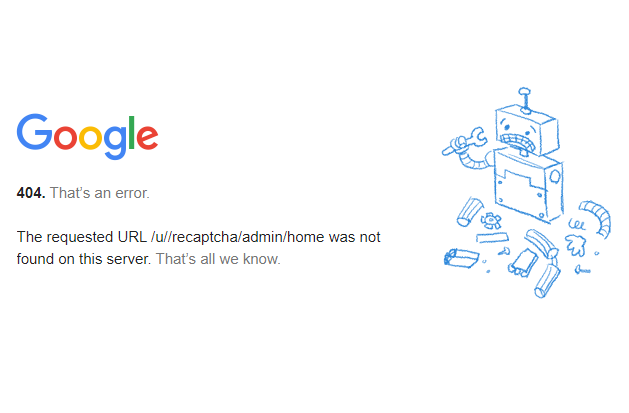
    404. That’s an error.

    When you encounter this error on Google:

    The requested URL /u//recaptcha/admin/home was not found on this server. That’s all we know.

    Here is how you solve it:


    METHOD 1

    This mostly happens when you have been logged into multiple Gmail accounts a the time.

    The easiest resolve for this I have found is to log out from all accounts and log in back with the account you want to use re-captcha with.

    Click on “admin console” button and you are in…


    METHOD 2

    Go to google.com, switch to the Gmail account you want to use, type “recaptcha” in the search box and click the “admin console” button…


  • Google Maps API error: Geocoding Service: This API project is not authorized to use this API.

    Google Maps API error: Geocoding Service: This API project is not authorized to use this API.

    You receive the following error message when trying to view Google Maps:Geocoding Service: This API project is not authorized to use this API.  For more information on authentication and Google Maps JavaScript API services please see: https://developers.google.com/maps/documentation/javascript/get-api-key

    You will need to enable the Geocoding API under APIs in the Google Cloud Platform Console to resolve this error. To do so, please follow the steps below:

    1. Go to GCP dashboard https://console.cloud.google.com/apis/dashboard?
    2. Click on “ENABLE APIS AND SERVICES”
    3. Search for ‘Geocoding API’
    4. Click on the ‘Geocoding API’ result
    5. Click on the Enable button
  • 30-Million Dollar Funnels

    30-Million Dollar Funnels

    EXPERTS WILL SHARE THE SECRETS OF THEIR MILLION DOLLAR FUNNELS !!!

    Let’s get to the point right away…

    • What is a sales funnel? Is is a buying process that companies lead customers through when purchasing products.
    • Show me a most basic funnel. Here: TRAFFIC => LEADS => SALES
    • What is ClickFunnels? ClickFunnels is a SAAS (software as a service) online drag/drop tool that allows easy web page and funnel building. Try FREE for 14 days!
    • Who uses Clickfunnels? Many top online marketers use this tool to sell their products and services and sign-up people for webinars.
    • What is a 2-comma club? 2-comma club is a ClickFunnels community of people who have made $1M+ in sales with one funnel using ClickFunnels.
    • What is 30days.com? 30days.com is a 30 day (summit) program where each day one 2-comma club member will reveal his/her $1M+ sales funnel. They reveal how would they build their funnel from scratch in case they would loose everything. Yes, as they are starting all over – and you got to see it…
    • Besides the summit (video presentations) Russel has put all of this in a 550-page book for your reference and you do not want to miss this.
    • For only $100 + SH you will get access to the summit recording videos and will get a paperback copy of this must have book to lay your hands on…
    • Opportunities like this do not come that often – grab it while you can

Nerko Marketing & Tech
Privacy Overview

This website uses cookies so that we can provide you with the best user experience possible. Cookie information is stored in your browser and performs functions such as recognising you when you return to our website and helping our team to understand which sections of the website you find most interesting and useful.